
We’re down. What now?
An ethic for tough times

Until a few years ago, the climate story was grim. However, since 2019 the plummeting costs of solar and wind energy put a spring in our step and it looked like momentum was building. The heavens seemed briefly to smile, and circumstances seemed to favor our cause.
As 2025 begins, climate advocates have reason to be dismayed. Despite accumulating climate disasters, and ever-more alarming warnings from climate scientists1, the world looks less likely to act on climate change than in recent years.
Major election results in the industrialized world--in the US, UK, France, Germany and Ireland, manifest clear backlash against climate action.2
The COP 29 meeting following up on the Paris Climate Agreement ended without serious steps to finance climate action in the Global South. Other international environmental conferences adjourned in failure.3
Elon Musk, once a foremost climate champion, seems to have switched sides.
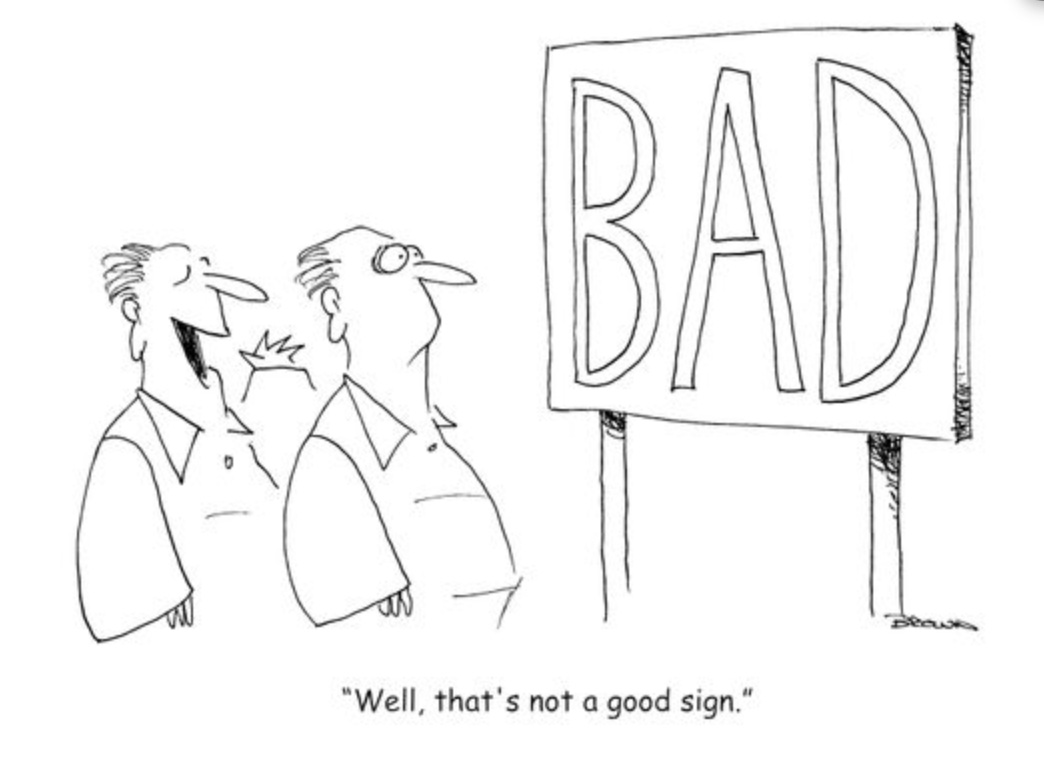
Source: Joe Brown, www.CartoonStock.com
The winds of history seem again to be blowing against our cause.
The stakes remain high. We observe
that almost half the world’s 2.2 billion children are already at “extremely high risk” of the impacts of the climate crisis4,
that the climate crisis is one among many other major system risks, including geopolitical, economic, technical, educational and democratic crises--which together comprise the polycrisis5, and
that each of these can spread by exponential rates, and exacerbate others unpredictably. leading to much worse crises.
What ought we do, in these circumstances?
With this question, we move from the realm of “is” to the realm of “ought”.6
“Is” questions call for us to see the world as it is. For example: “Why is global heating happening?” Or, “Why is it that so many people refuse to react to the alarm bells"? These questions call for an analysis of our situation, and a clear understanding of it. We pursue the answers to "is" questions through observation, logic and science.
“Ought” questions call for us to look beyond what is, to what we do about it, through our own decisions and actions. For example: “What should we do to reverse global heating?” Or, “How ought we reach out to climate denialists?”. We pursue them through moral reasoning, our thoughts and feelings about what is important for us.
What ought we do when the “is” turns unpromising, even dark? In our case, what is the point of us doing our bit in favor of climate action, when Trump and the fossil fuel industry and its facilitators wield tools thousands of times stronger than ours—and against us?
Most of us have grown used to a world where progress seemed normal and even inevitable, the natural outcome of things; the good guys eventually won, and most people’s lives generally improved over time. With those expectations, it made sense to stick to business as usual, follow along where the rest of society carried us, and expect our lives and those of others, too, to improve. The “meaning of life”? “Why overthink it? Just put your head down, work smart, and move forward, along with almost everyone else!”
But wait, what if humankind continues to deny the climate crisis, and its existential risks for our civilization? What if the steps toward climate progress slow, and the arc of history seems to be bending, not toward justice, but toward pain and failure?
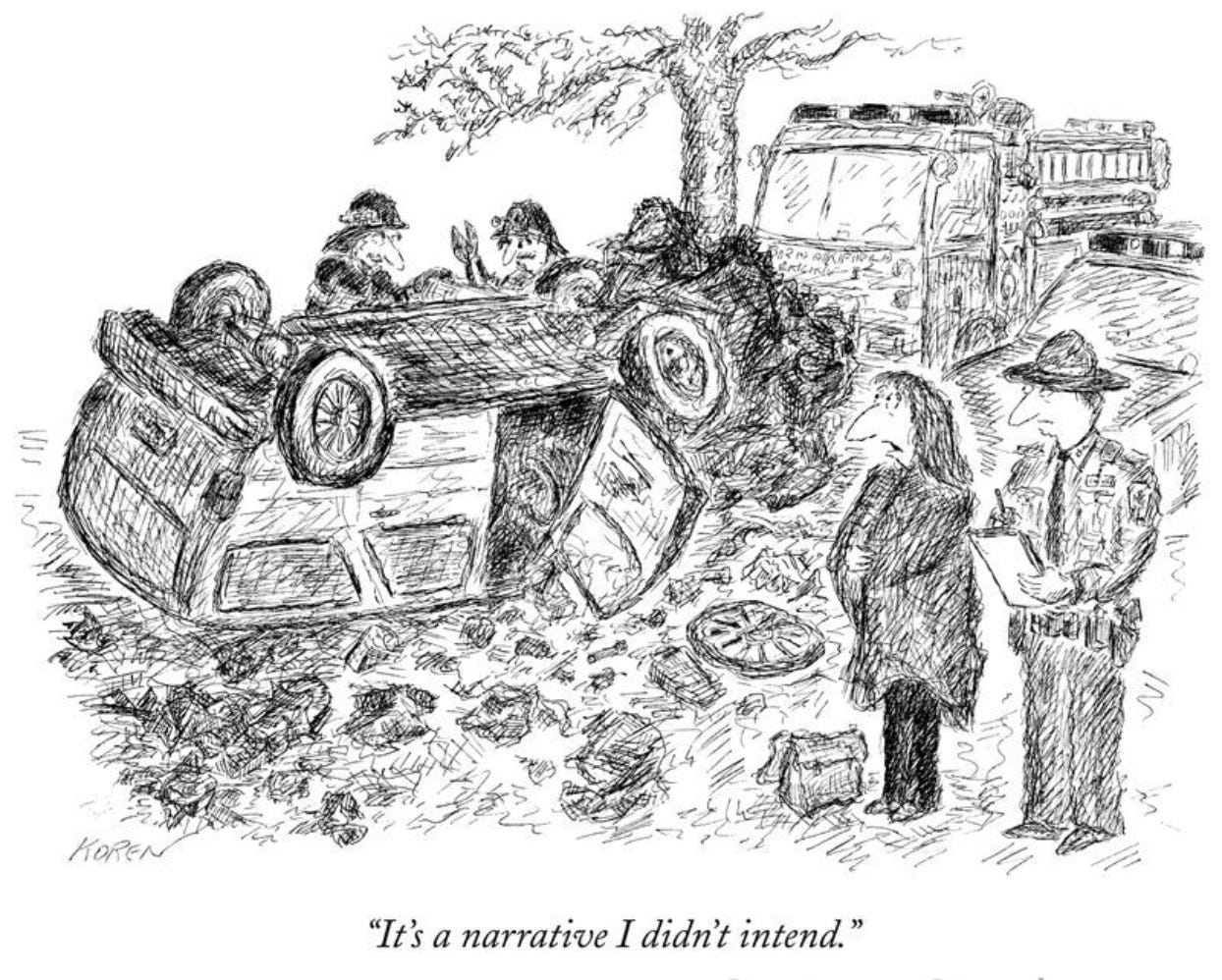
Source: Edward Koren, www.CartoonStock.com
A voice from the camps
I suggest we take inspiration from someone who gave deep thought to this very question, in a context much, much worse than ours: In a Nazi death camp, during World War II. Viktor Frankl was a Jew, and a doctor, who saw fellow inmates starved, abused, and outright exterminated. He knew any of them could be killed by a guard at any moment, for no reason at all.7 What meaning did he find in life, in those conditions?
Even in the extreme conditions of a death camp, Frankl observed fellow inmates giving meaning to their lives by sharing their starvation rations with others.
We who lived in concentration camps can remember the men who walked through the huts comforting others, giving away their last piece of bread.
They could not know if the Allies were winning the war against Nazi Germany. They could not even expect that anyone around them would survive to tell others about their good deeds. All they could count on was the moment in front of them, and they gave it meaning by what they chose to do.
Here is Frankl’s conclusion:
It did not really matter what we expected from life, but rather what life expected from us. We needed to stop asking about the meaning of life, and instead to think of ourselves as those who were being questioned by life—daily and hourly. Our answer must consist, not in talk and meditation, but in right action and in right conduct. Life ultimately means taking the responsibility to find the right answer to its problems and to fulfill the tasks which it constantly sets for each individual.
Would it have felt better to them to know they were part of what would eventually be a victorious coalition against their tormentors? No doubt. But ultimately this had no bearing on the meaning they could give their lives, through actions entirely under their own control.
Source: Roy Delgado, www.CartoonStock.com
How you do this depends on you
To the further question, “But what is the right answer about what I should do?” Frankl offers no magic formula. But he explains that, normally, the answers will be plural, and highly personal.
The meaning of life differs from man to man, from day to day, from hour to hour. What matters, therefore, is not the meaning of life in general but rather the specific meaning of a person's life at a given moment. To put the question in general terms would be comparable to the question posed to a chess champion: "Tell me, Master, what is the best move in the world?" There simply is no such thing as the best or even a good move apart from a particular situation in a game and the particular personality of one's opponent. The same holds for human existence. One should not search for an abstract meaning of life. Everyone has his own specific vocation or mission in life to carry out a concrete assignment which demands fulfillment. Therein he cannot be replaced, nor can his life be repeated. Thus, everyone's task is as unique as is his specific opportunity to implement it.
Or, as he explains elsewhere, whatever may be our particular circumstances, we each have the opportunity to make the best of them.
Life is potentially meaningful under any conditions, even those which are most miserable. And this in turn presupposes the human capacity to creatively turn life’s negative aspects into something positive or constructive. In other words, what matters is to make the best of any given situation.
Put simply, Frankl’s moral principle is to give our lives meaning by responding constructively to remedy the shortcomings in whichever situation we find ourselves.
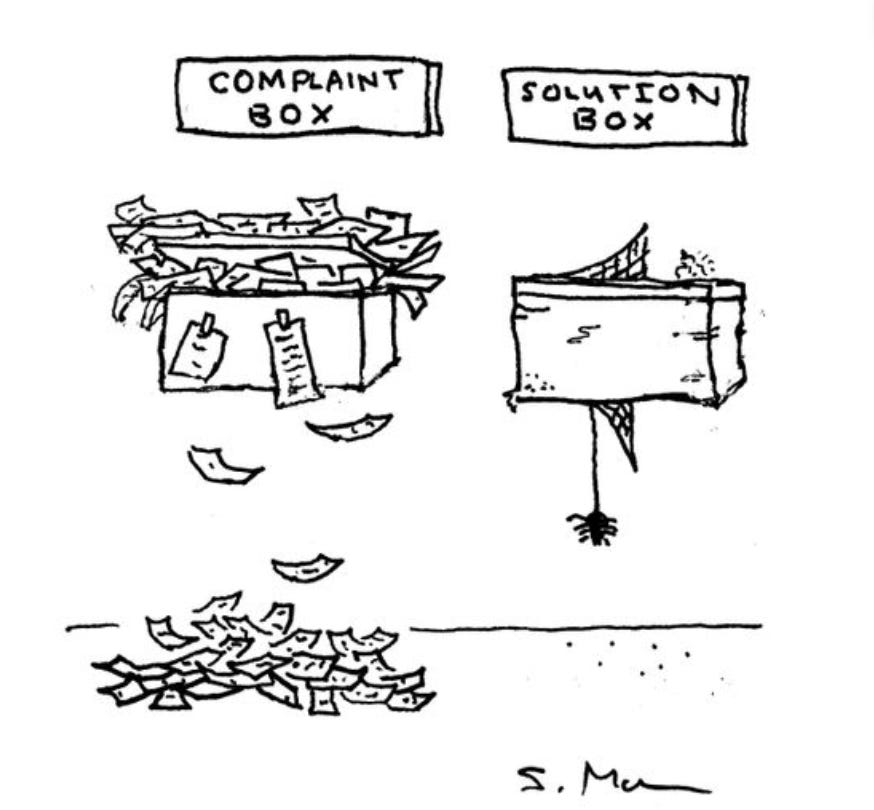
Source: Steve McGinn, www.CartoonStock.com
How to give this further content
To give this substance, Frankl draws on his experience as a psychologist, death camp survivor and philosopher to describe three major paths to giving one’s life meaning.
We can discover this meaning in life in three different ways: (1) by creating a work or doing a deed; (2) by experiencing something or encountering someone; and (3) by the attitude we take toward unavoidable suffering.
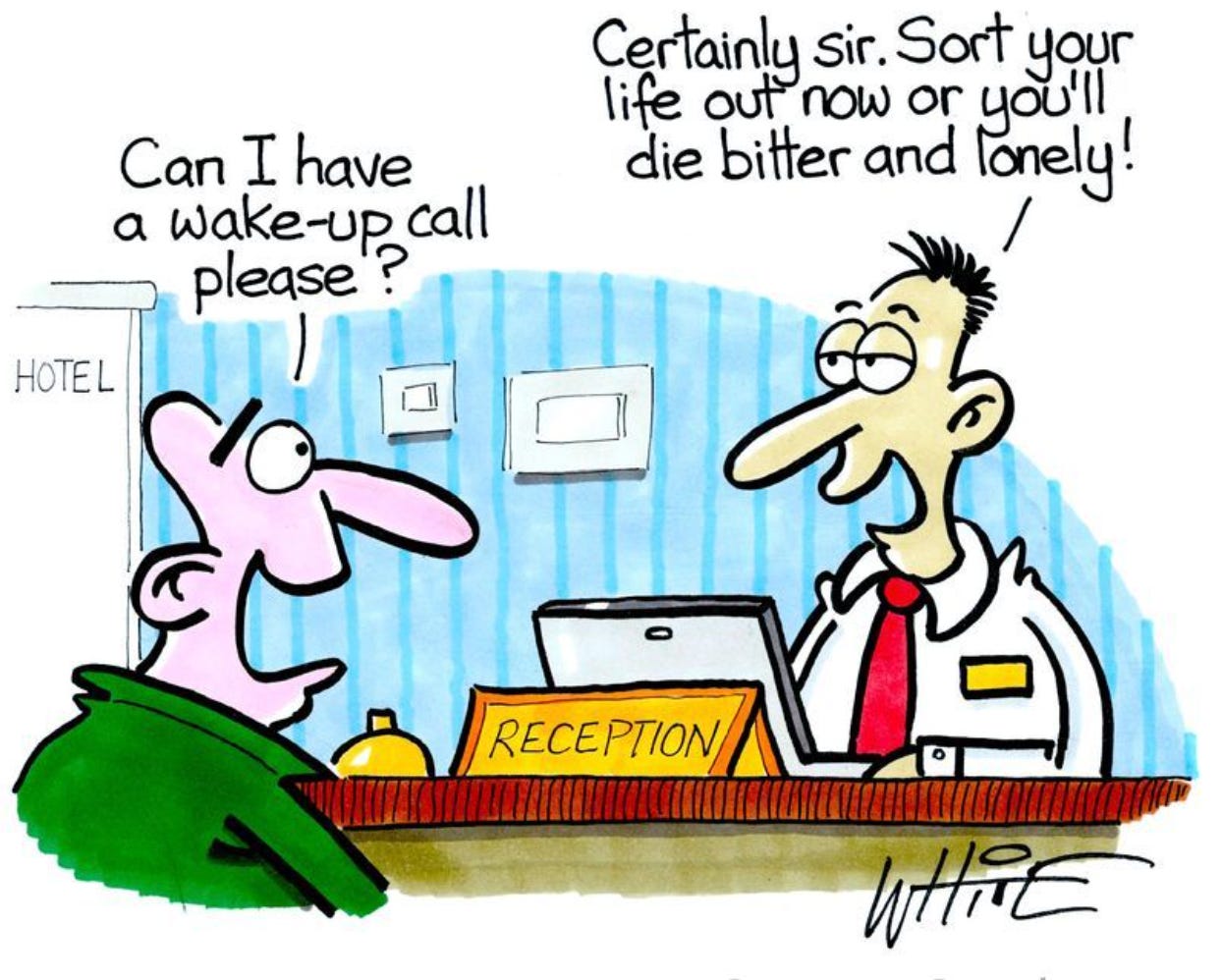
In other words, we create meaning through work (doing something significant), love (caring for another person), and acting with courage during difficult times. Common to all these avenues is looking beyond ourselves—beyond our individual pleasure or self-interest, narrowly defined.
Being human always points, and is directed, to something, or someone, other than oneself—be it meaning to fulfill or another human being to encounter. The more one forgets himself—by giving himself to a cause to serve or another person to love—the more human he is and the more he actualizes himself. ..
Source: Trevor White, www.CartoonStock.com
He echoes many other moral philosophers in arguing that success and happiness are undeniably worthy goods, but that they are best achieved by not making them our main aim.
Don't aim at success. The more you aim at it and make it a target, the more you are going to miss it. For success, like happiness, cannot be pursued; it must ensue, and it only does so as the unintended side effect of one's personal dedication to a cause greater than oneself or as the by-product of one's surrender to a person other than oneself. Happiness must happen, and the same holds for success: you have to let it happen by not caring about it. I want you to listen to what your conscience commands you to do and go on to carry it out to the best of your knowledge. Then you will live to see that in the long-run—in the long-run, I say!—success will follow you precisely because you had forgotten to think about it.
In short, Frankl offers an ethics of responsibility. Yes, in his view we are radically free to do the best that circumstances allow.
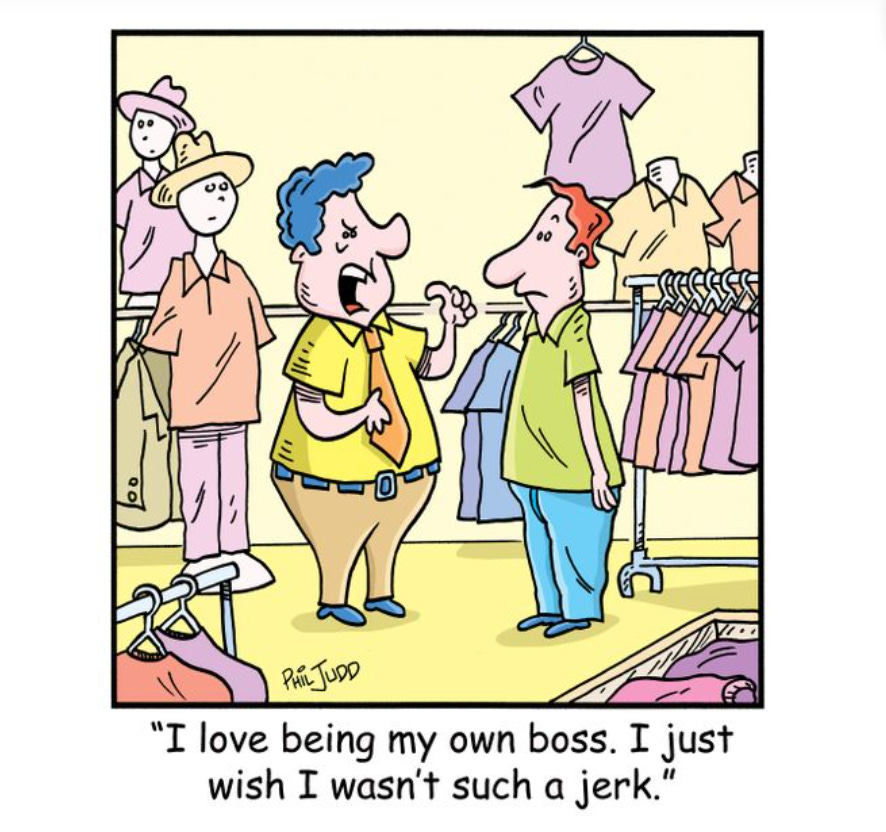
Freedom, however, is not the last word. Freedom is only part of the story and half of the truth. Freedom is but the negative aspect of the whole phenomenon whose positive aspect is responsibleness. In fact, freedom is in danger of degenerating into mere arbitrariness unless it is lived in terms of responsibleness. That is why I recommend that the Statue of Liberty on the East Coast be supplemented by a Statue of Responsibility on the West Coast.
Source: Phil Judd, www.CartoonStock.com
If we really use our freedom, to look beyond our personal pleasures and preferences, to the suffering, abuse, and oppression all over the world, or to the arts, sciences and other worthy activities that are worthy of sustenance, or to the people who lack care and affection, Frankl expects that we cannot fail to recognize tasks that will go unmet unless we do them. If we truly open our eyes, and our minds, to understand the insufficiencies all around us, we will begin to see worthy answers we can give to the questions that the world poses to us.
By declaring that man is responsible and must actualize the potential meaning of his life, I wish to stress that the true meaning of life is to be discovered in the world rather than within man or his own psyche, as though it were a closed system…For the world is in a bad state, but everything will become still worse unless each of us does his best.
Frankl cautions us of ominous 20th century precedents.
Since Auschwitz we know what man is capable of. And since Hiroshima we know what is at stake.
A hard ethic for hard times?
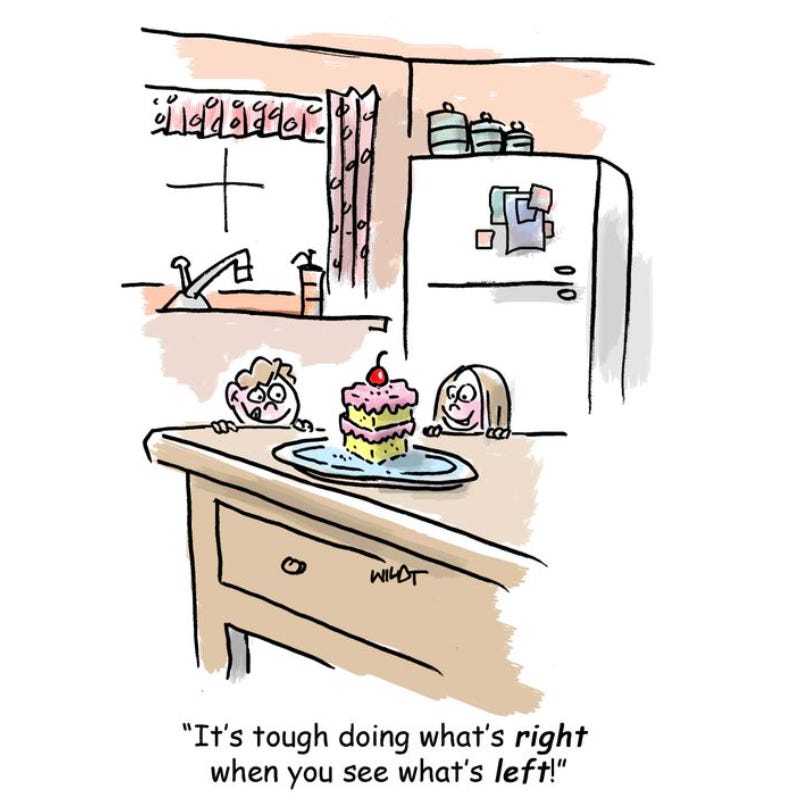
As the climate crisis and related crises intensify, we’ll need ethics that don’t melt in the sun’s glare. Frankl’s moral principles offer a good foundation for morality during tough times.
Source: Chris Wildt, www.CartoonStock.com
It’s hard to get people to agree on answers to important “is” climate questions, like “What are the causes of global heating”. It’s even harder when it comes to “ought” questions, like “How should we organize ourselves to fight global heating?”
As a first step, we urgently need a moral framework to organize our thinking and prioritize our actions at a personal level. Viktor Frankl’s ethical framework, hammered out in the crucible of a death camp, succeeds at many levels:
It directs our attention beyond just ourselves, to ourselves-in-the-world: The world that is in crisis and calls for our help.
It’s clear and action-oriented.
It’s been tested in the toughest of circumstances.
It’s applicable by everyone, everywhere, no matter our personal circumstances—no matter how hard the times become.
As we will see in future posts, Frankl’s moral framework also respects the complexities of human psychology and the diversity of our prior commitments.
It’s consistent with the findings of moral psychology, as summarized for example, in Jonathan Haidt’s The Righteous Mind. 8
It’s compatible with most moral traditions, religions and philosophies, which can serve as sources of more specific guidance.
Each of my posts is part of an extended strategy for how to surmount the climate crisis. This evolving strategic analysis is organised by themes, in a separate post, “Posts, organised thematically”, which I invite you to consult.
“‘We Are Afraid’: Scientists Issue New Warning As World Enters ‘Uncharted Climate Territory’” By David Vetter. Forbes Online. Updated Oct 24, 2023. Consulted on January 8, 2025.
“2024 in review: Green parties face mixed fortunes amid anti-government backlash” By Eric Balonwu. Heinrich Böll Stiftung European Union. December 19, 2024.
“Environmental Internationalism Is in Its Flop Era: Every major international negotiation—over biodiversity, plastics, and climate—failed to meet its goals” By Zoë Schlanger. The Atlantic. Published on December 13, 2024. Consulted on January 8, 2025.
“The Climate Crisis is a Child Rights Crisis: Introducing the Children’s Climate Risk Index” UNICEF. August, 2021.
See my previous post, “From climate crisis to polycrisis: The changes since 2021”.
“Is–ought problem” Wikipedia contributors. Wikipedia, The Free Encyclopedia, Accessed January 9, 2025..
This description and all citations of Viktor Frankl are from Man’s Search for Meaning. By Viktor E. Frankl. Kindle Edition. Beacon Press. 2006.
The Righteous Mind: Why Good People Are Divided by Politics and Religion By Jonathan Haidt. Vintage Press. February 12, 2013.
What a breath of fresh air this piece is, Javier. Great reminders from Frankel about making meaning through right actions, even more important in what feels like such dark times. Thank you for continuing to light the path.